
Driveway Concrete Sealing in Mason, OH
Protect your driveway from Ohio freeze-thaw damage, snow plow scratches, de-icing chemicals, and oil spills with professional penetrating concrete sealer and protective driveway coating.
Long-Term Driveway Concrete Coating & Sealer Protection
Mason and Greater Cincinnati winters are notorious for causing concrete spalling, flaking, and surface pitting. Moisture penetrates untreated concrete, freezes, expands by roughly nine percent, and pops off the top layer. Add road salt, magnesium chloride de-icers, and snow plow blades to the mix and an unprotected driveway ages decades in just a few seasons.
Garage Floors Today applies deep-penetrating silane-siloxane concrete sealers that form a hydrophobic barrier inside the microscopic pores, repelling water, road salt, and vehicle fluids before they can cause damage. For homeowners who want visible color and gloss, we also offer UV-stable polyaspartic driveway coatings that combine protection with curb appeal.
What Destroys Unsealed Driveway Concrete in Ohio
Freeze-Thaw Spalling
Water enters pores, freezes, and expands, popping off the surface layer. Sealing blocks the water from entering.
Salt & De-Icer Attack
Calcium chloride and magnesium chloride break down the cement paste. A sealed surface keeps these chemicals on top where they wash away.
Oil & Fluid Staining
Vehicle leaks soak into bare concrete and leave permanent dark stains. A sealer stops penetration so spills wipe clean.
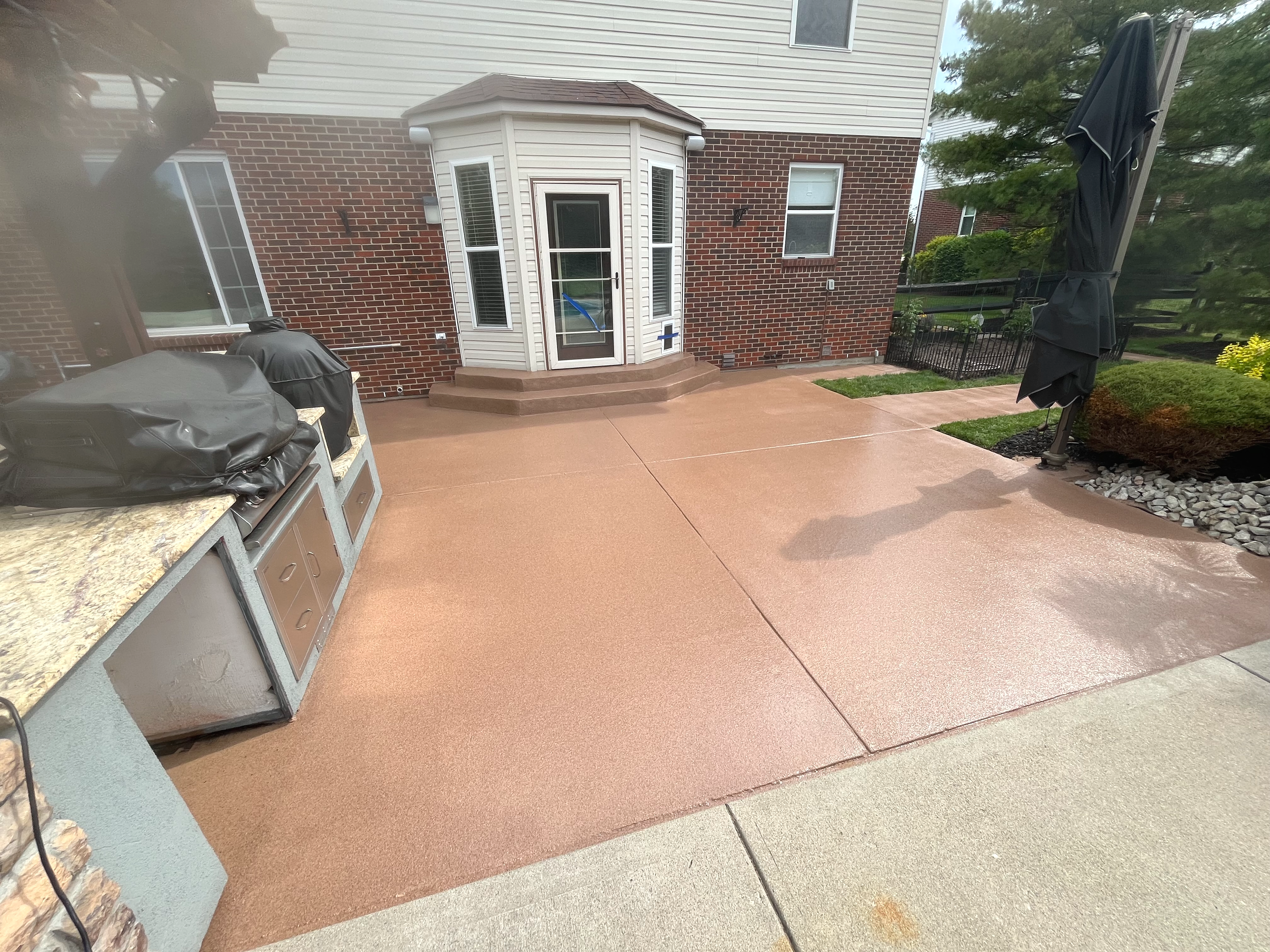
Driveway sealing pairs naturally with our patio coatings if you want a coordinated exterior finish, and the same hydrophobic chemistry protects our pool deck coatings against water intrusion.
Driveway Sealing FAQs in Mason, OH
What is the difference between a penetrating sealer and a surface coating for a driveway?
A penetrating silane-siloxane sealer soaks into the concrete pores and creates a hydrophobic barrier below the surface, leaving a natural matte look. A surface coating like polyaspartic sits on top and adds color, gloss, and visible protection. We help you choose based on whether you want a natural or wet-look finish.
How does sealing prevent the winter spalling I see on my neighbors' driveways?
When water enters untreated concrete pores and freezes, it expands by roughly nine percent and pops off the top layer, creating the pitting and flaking known as spalling. Our sealers block water from entering the pores in the first place, so there is nothing inside to freeze and expand.
Will the sealer stop oil stains from my vehicles?
Yes. Both our penetrating sealers and surface coatings create a barrier that prevents motor oil, power steering fluid, and transmission fluid from soaking into the concrete. Spills wipe up cleanly instead of leaving permanent dark stains.
How often does a driveway need to be resealed?
A high-quality penetrating silane-siloxane sealer typically lasts three to five years depending on traffic and exposure. A polyaspartic surface coating lasts far longer, often a decade or more, because it forms a durable wear layer rather than relying on pore penetration alone.
Can you seal a brand-new driveway right after it is poured?
New concrete should cure for at least 28 days before any sealer is applied so excess moisture can escape. We will assess your slab during the free estimate and schedule the sealing at the correct time to avoid trapping moisture that causes coating failure.
Visit the Exterior Concrete Resurfacing overview or check our Patio Concrete Coatings in Mason, OH.
Protect Your Driveway Before Winter
Contact Garage Floors Today for a free driveway evaluation and sealing estimate in Mason, West Chester, or Greater Cincinnati.
Request Your Free Estimate